How To Choose Pencils For School Children | 15 Practical Tips
The best pencil for a child learning to write is usually a wider triangular pencil that makes a clear mark without much pressure. For many preschool and early primary children, a jumbo pencil or triangular pencil for kids can make the pencil grip feel easier and more stable.
For older school children who already write comfortably, a standard HB or No. 2 pencil usually suits everyday classroom writing. Younger children may prefer a softer pencil grade, such as 2B, because it leaves a darker mark with a lighter touch.
The right choice depends on your child’s age, hand size, pencil grip, writing pressure, school rules, and whether the pencil has suitable safety labelling. This guide explains how to choose pencils for school children without overspending or buying tools that make writing harder than it needs to be.
Quick Answer - Choose By Age, Grip, And Lead Grade
If you want a simple starting point, choose the pencil by your child’s stage rather than by brand alone.
For preschool and Reception children, a jumbo triangular pencil with a soft, clear mark is often the easiest option. For children in early primary school, a triangular or hexagonal pencil can support a more comfortable pencil grip. For older primary children, a standard HB pencil is usually practical for daily schoolwork.
HB vs 2B pencil for school is mostly a question of age and pressure. 2B pencils make darker marks with less effort, which can help younger children who press too hard. HB pencils are firmer, smudge less, and are commonly used once children can write with better control.
You should also check for non-toxic pencils for children, suitable safety labelling, and any rules from your child’s school before buying.
What You'll Take Away From Reading This...
- How to choose pencils for school children by age, hand size, grip, and classroom use
- Why softer pencil grades can help some younger children write with less pressure
- The difference between triangular, hexagonal, and round pencil barrels, and when each one makes sense
- What pencil grade is best for handwriting at different school stages
- How to check safety labels such as CE, UKCA, ACMI AP, ASTM D-4236, and FSC
- When a mechanical pencil may be suitable, and when it may cause more frustration
- A practical 15-tip checklist you can use before your next stationery shop visit
Why The Pencil You Choose Actually Matters
Pencil choice is a small decision, but it can affect how comfortable writing feels for a child. In the early years, children are still building hand strength, coordination, and control. A pencil that is too thin, slippery, faint, or difficult to control may make writing feel more tiring than it needs to be.
This does not mean one pencil will magically fix handwriting. Children can develop different functional pencil grips, and not every child needs the same tool. The aim is not to force a perfect grip. The aim is to choose a pencil that helps your child write with less strain, clearer marks, and better control.
A pencil that makes a visible mark without heavy pressure can help children avoid pressing too hard. A barrel shape that gives the fingers somewhere comfortable to rest can also make writing feel more stable. For some children, a triangular pencil, a jumbo pencil, a softer lead, or better-quality wood can make everyday school writing less frustrating.
If your child regularly complains of pain, avoids writing, presses extremely hard, or cannot keep up with classroom writing, the pencil is only one part of the picture. In that case, it is worth speaking with the teacher and, if needed, an occupational therapist or other qualified professional.
Getting this right does not require buying expensive stationery. It simply means knowing which pencil features are useful at each stage.
1. Match The Barrel Thickness To Your Child's Hand Size
Barrel thickness is the starting point for everything else. Young children, particularly those in preschool and Reception year, have small hands with developing muscle strength. A standard-diameter pencil gives them very little to grip onto, which forces them to tense their fingers just to maintain control. A jumbo or thick-barrelled pencil provides far more surface area for the hand to hold, reducing the effort required and allowing a more relaxed, natural grip.
As a general guide, jumbo pencils are best suited to children under 6. By the time a child reaches Grade 1 or Year 2, around age 6 to 7, most are ready to move to a standard-width barrel. If a child at that age is still struggling with grip stability, staying with a wider pencil a little longer causes no harm at all.
2. Choose A Triangular Barrel For Children Still Learning To Grip
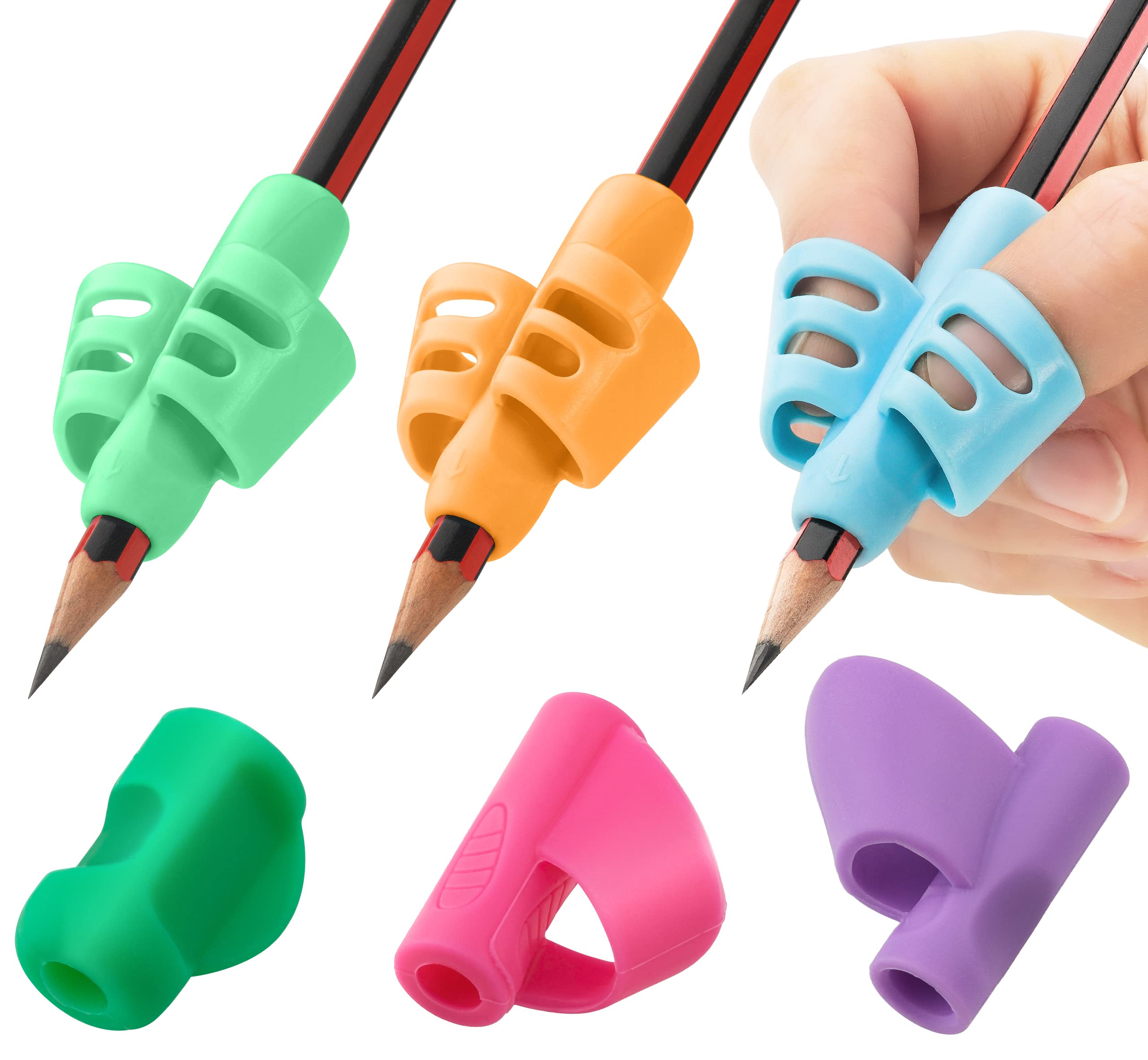
The shape of the pencil barrel can make a real difference for children who are still learning where to place their fingers. A triangular pencil has three flat sides, giving the thumb, index finger, and middle finger natural places to rest.
This can guide children toward a more stable pencil grip without needing constant correction. It is especially useful for preschool, Reception, and early primary children who are still building hand control.
A triangular pencil does not guarantee a perfect grip, and not every child needs one. Some children write comfortably with other mature grips. The goal is not to force one “correct” hand position, but to help your child hold the pencil in a way that feels relaxed, controlled, and comfortable.
Triangular pencils are often most useful between ages 4 and 7. Once a child has a stable grip and writes comfortably, they may no longer need the extra guidance from the shape.
3. Switch To A Hexagonal Barrel As The Grip Stabilises
Once a child has a reliable grip, a hexagonal barrel becomes a practical everyday choice. A hexagonal pencil does not roll off the desk. On a busy classroom table where a pencil can easily slide off and snap its lead on the floor, this matters more than it sounds. The six flat sides also allow the child to rotate the pencil slightly as the tip wears down, getting more writing time out of each sharpening without needing to stop the task.
Round pencils, by contrast, roll freely and offer no structural guidance for finger placement. They suit children who have already established a stable and confident grip, typically from around Year 3 or Grade 3 onward, and are not ideal for children who are still building that foundation.
4. Pick Soft Lead (2B) For Young Children, Not Hard Lead
Lead softness is probably the most overlooked factor in pencil choice for young children, and it has a direct effect on the grip habits they develop. Hard-lead pencils, anything marked H or above, require significant pressure to produce a visible mark.
When a young child cannot get their drawing or writing to show up clearly, their instinct is to press harder. Over time, this creates a gripping and pressing habit that is exhausting to maintain and very difficult to change later.
Soft-lead pencils, particularly 2B, glide along the paper and produce a clear, dark mark with minimal pressure. The child learns that holding the pencil lightly produces good results, which is exactly the habit you want to establish early.
Look for the grade marking on the side of the pencil or at the top of the barrel. If it says 2B, it is a soft pencil suitable for young writers. If it says HB, H, or a number followed by H, it is a harder pencil better suited to older children.
5. Use HB For Older Children Who Write With Control
HB is a practical, everyday pencil grade for many school children once they can write with a steady, controlled touch. It gives a clear enough mark for ordinary schoolwork while being firmer than 2B, so it usually smudges less and lasts longer between sharpenings.
For children aged 7 and above, HB is often a sensible classroom choice. It works well for longer writing tasks, homework, worksheets, and general note-taking.
However, HB should not be treated as a universal rule for every child or every exam. Some schools and exam boards specify HB, B, or No. 2 pencils, while others may have different rules. Always check your child’s school supply list or exam instructions before buying pencils for tests.
If your child is older than 7 but still presses hard, tires quickly, or finds HB too faint, there is no harm in using a softer pencil for practice at home while they build control.
6. Avoid Hard-Lead Pencils (H Or 2H) For Everyday Primary School Writing
H and 2H pencils produce very light, faint marks and require the most pressure to write with. In a school setting, these grades serve no practical purpose for writing. They appear in technical drawing and certain art applications, typically at secondary school level, but have no place in a primary school pencil case. A child given an H-grade pencil for homework will struggle to produce marks they can read back clearly, and the habit of pressing hard will carry over to every other pencil they use.
If H-grade pencils come as part of a set you have purchased, simply set them aside for now. They are not appropriate for everyday school use at the primary level.
7. Check The Pencil Length Relative To Your Child's Hand
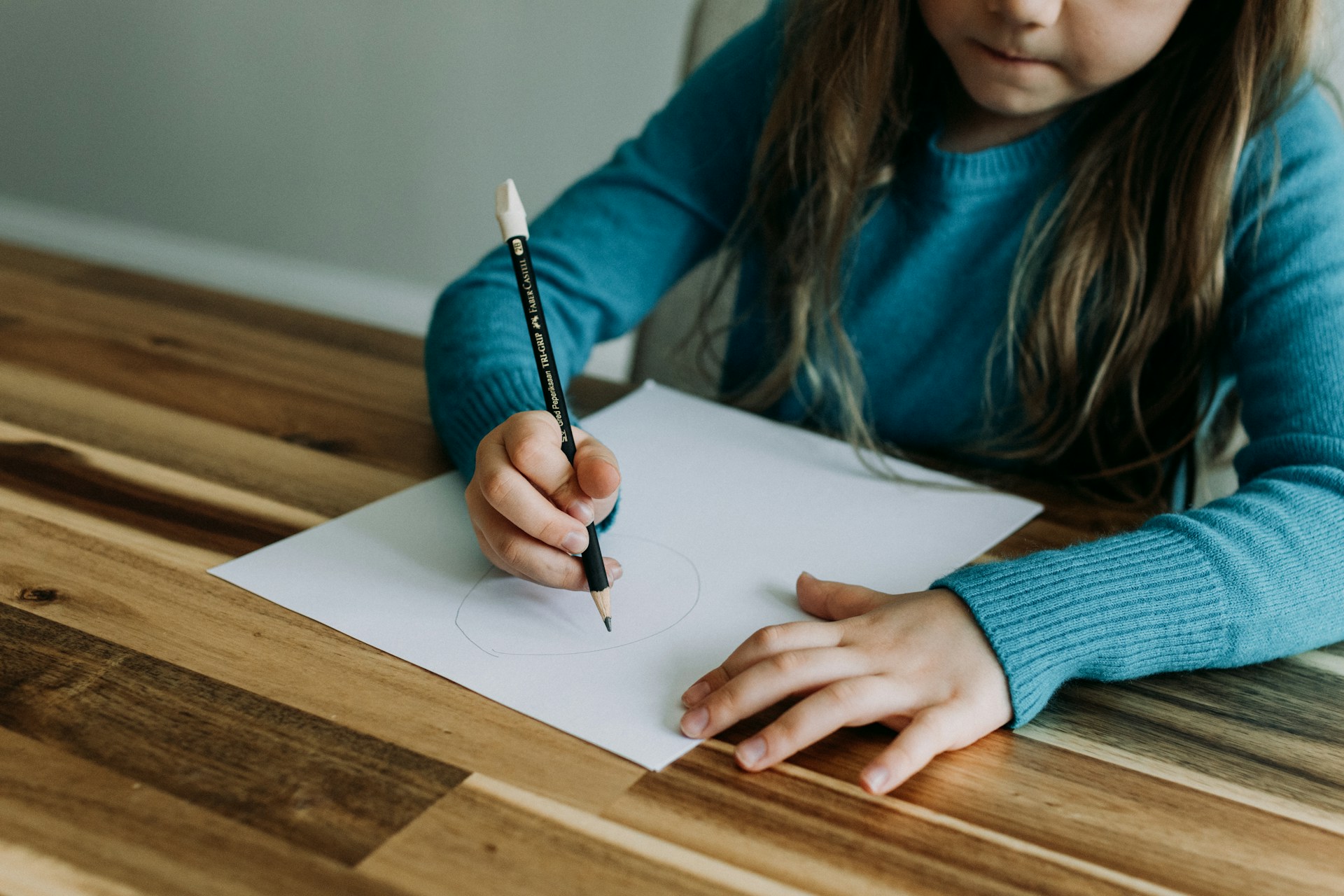
Pencil length affects grip position in a way that is easy to overlook until it becomes a problem. A full-length pencil is suitable for a child who has the hand size and coordination to hold it at the correct point along the barrel. As a pencil becomes shorter through repeated sharpening, the child is forced to grip closer and closer to the tip, which disrupts the tripod position and reduces control over the writing movement.
Some children's pencils include coloured length indicator bands near the top of the barrel. When the child's hand reaches the final band, the pencil has become too short for comfortable use and should be replaced.
As a practical guide, a pencil is ready to be retired when less than roughly 8 centimetres (about 3 inches) of usable length remains. At that point, most primary-aged children cannot hold it comfortably without their fingers touching the tip.
8. Check Non-Toxic Labelling And Safety Certification
Safety labelling matters, especially for younger children who may chew pencil ends, put stationery near their mouths, or use pencils for long periods.
Look for clear, non-toxic labelling from a reputable manufacturer. In the UK and Europe, CE or UKCA-style markingmay appear on products that fall under toy or children’s product safety rules. These markings indicate that the product has been made to meet relevant safety requirements, but they should not be treated as a guarantee that every pencil is suitable for every child.
In the United States, look for ACMI AP certificationon art materials, where available. The AP Seal means the product has been reviewed by a qualified toxicologist and is considered non-toxic when used as intended. You may also see ASTM D-4236 on art materials, which relates to hazard labelling requirements.
For everyday school pencils, choose products from reputable brands, check the age guidance on the packaging, and avoid unlabelled novelty pencils if you cannot verify what materials or coatings have been used.
9. Choose Wood Quality That Sharpens Without Splintering
Poor wood quality is one of the most common sources of pencil frustration in primary school, and it is entirely avoidable. When a pencil is made from low-grade wood, sharpening it produces uneven results. The wood may splinter around the tip rather than peeling away cleanly, leaving the graphite exposed and fragile. The child ends up with a pencil that breaks immediately upon contact with paper, and the whole sharpening process has to start again.
Cedar and basswood are the two most commonly used materials in quality pencils, and both sharpen reliably and cleanly. You will not always find the wood species listed on packaging, but pencils from established brands that have been in production for many years tend to use better timber than unbranded budget alternatives.
10. Avoid Novelty And Heavily Decorated Pencils For Classroom Use
A pencil covered in cartoon characters might make a child smile in the shop, but it can create real problems once they are sitting at a classroom desk. Bright, irregular patterns and raised decorations on the barrel can distract a child's attention during lessons.
Children who are still developing concentration skills are more likely to fiddle with or stare at a visually stimulating pencil than to focus on the work in front of them. The same principle applies when children are working through structured classroom resources, such as printable multiplication tables, where a plain pencil helps keep their attention on the task rather than the tool in their hand. Some decorative pencils also have uneven barrel surfaces that interfere with a comfortable grip position.
This does not mean novelty pencils have no place at all. At home, for free drawing and creative activities, a fun pencil is perfectly fine. For school bags and classroom use, a plain, unfussy pencil keeps the focus where it belongs.
Read Also: Tips For Improving Your Handwriting
11. Consider A Built-In Eraser For Younger Children
For children in the early years of school, a pencil with a built-in eraser at the top end is a practical choice worth considering. Young children lose things. A separate eraser tends to disappear to the bottom of a bag or roll off a desk, leaving the child without one at the exact moment they need it. A pencil with an attached eraser removes that problem and means one fewer item to track in a pencil case.
The trade-off is quality. Built-in erasers on standard pencils are often small and less effective than a standalone eraser, occasionally smearing rather than lifting graphite cleanly. For younger children doing early writing and simple mark-making, this is usually acceptable. For older children who need clean corrections in neat written work, a separate eraser of good quality will give noticeably better results.
12. Factor In Pencil Weight For Children With Grip Or Pressure Difficulties
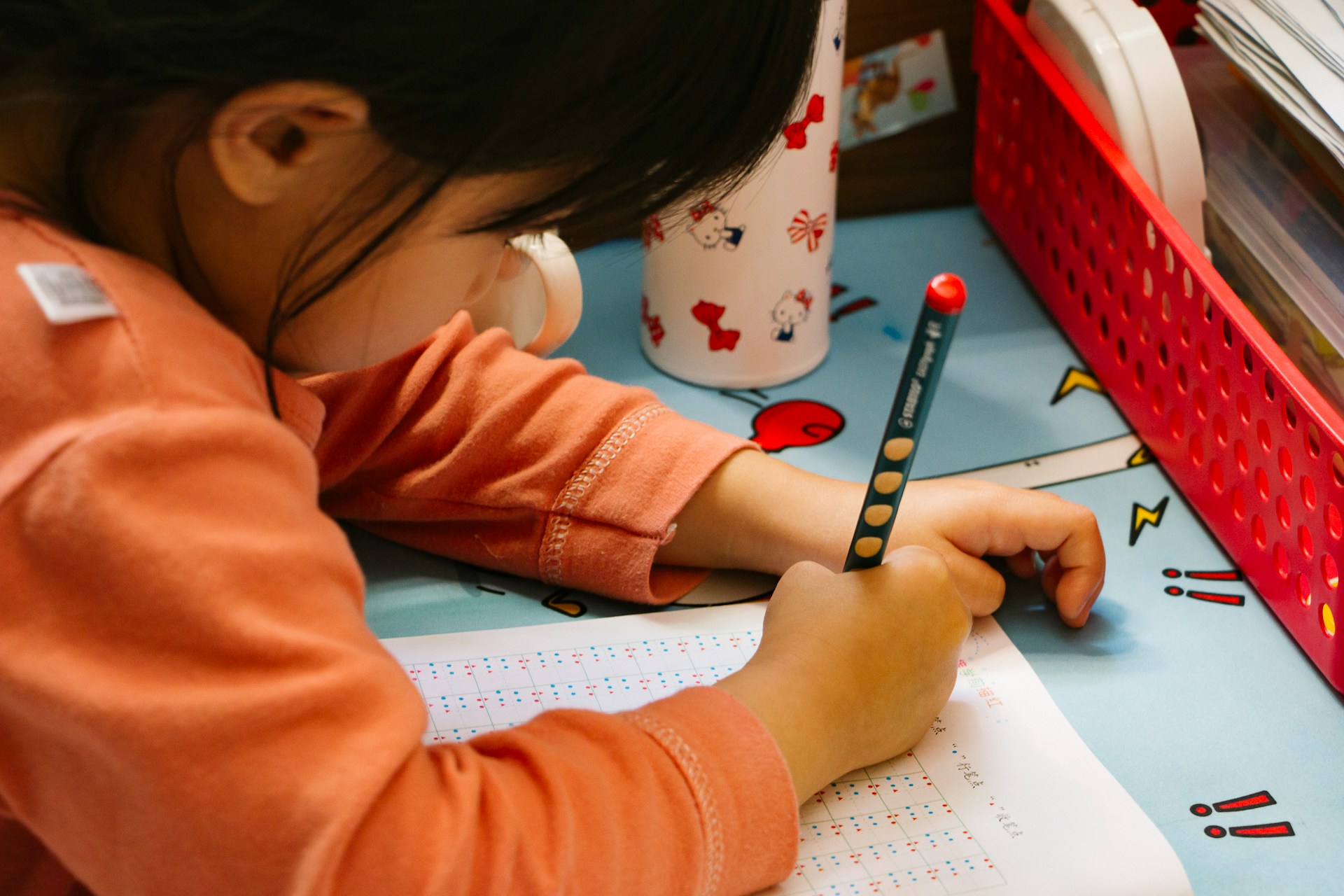
Most standard pencils are very light, which suits the majority of children. For some, though, a pencil with a little additional weight can make a meaningful difference.
A slightly heavier pencil provides more sensory feedback to the hand and fingers during writing. This proprioceptive input can help children who struggle to regulate their writing pressure or who find it difficult to sense where the pencil is making contact with the page. Occupational therapists sometimes recommend weighted pencils as part of a broader approach to handwriting support.
It is also worth knowing that a heavy decorative eraser or pencil topper can serve a similar purpose at a fraction of the cost of specialist weighted pencils, making this an accessible option for most families.
One important note: weighted pencils should not replace standard pencils permanently. Over time, the hand adapts to the additional weight, and the child may find it harder to write comfortably with an ordinary pencil. Rotating between weighted and standard pencils, if you use them, avoids this issue.
13. Look For Bright, Saturated Lead In Coloured Pencils
When choosing coloured pencils for school art and colouring activities, the brightness of the pigment matters just as much as lead softness does in graphite pencils. Pale or pastel leads produce faint colours that children struggle to see clearly on the page.
The predictable response is to press harder to make the colour show up, creating the same damaging pressure habit described in tip 4. Brightly pigmented leads transfer colour easily with a light touch, reinforcing the habit of gentle grip that supports good writing development overall.
Wax-based coloured pencils tend to lay down colour more smoothly than oil-based alternatives and are easier for small hands to control. For school-age children doing general colouring and art activities, wax-based options are usually the more practical choice.
14. Consider Eco-Friendly Pencils As A Comparable Alternative
Eco-friendly pencils can be a good choice, but it is worth checking the details rather than relying on vague green claims. FSC-certified pencilsare made with wood or paper materials from sources certified by the Forest Stewardship Council. Recycled-paper pencils are another option and are often made from rolled newspaper or recycled paper instead of traditional wood.
Some eco-friendly pencils write just as smoothly as standard wooden pencils, while others may feel scratchy, sharpen poorly, or break more easily. Judge them by the same standards you would use for any school pencil: a clear mark, comfortable barrel, reliable sharpening, suitable safety labelling, and durability in a pencil case.
Plantable pencils can be fun for children, but check the writing quality, safety labelling, and age guidance before buying. They are best treated as an engaging extra rather than the only pencil your child uses for school.
Check School Rules Before Buying Mechanical Pencils
Before sending a mechanical pencil to school, check the school supply list or ask the teacher. Some classrooms allow them, while others prefer wooden pencils because they are easier to manage, sharpen, share, and replace.
This matters even more for tests and exams. Some exam instructions specify HB, B, or No. 2 pencils, and some may not allow mechanical pencils at all. If you are unsure, send a standard wooden HB pencil as the safest everyday option.
15. For Children Aged 8 And Above, Decide Whether A Mechanical Pencil Is Ready
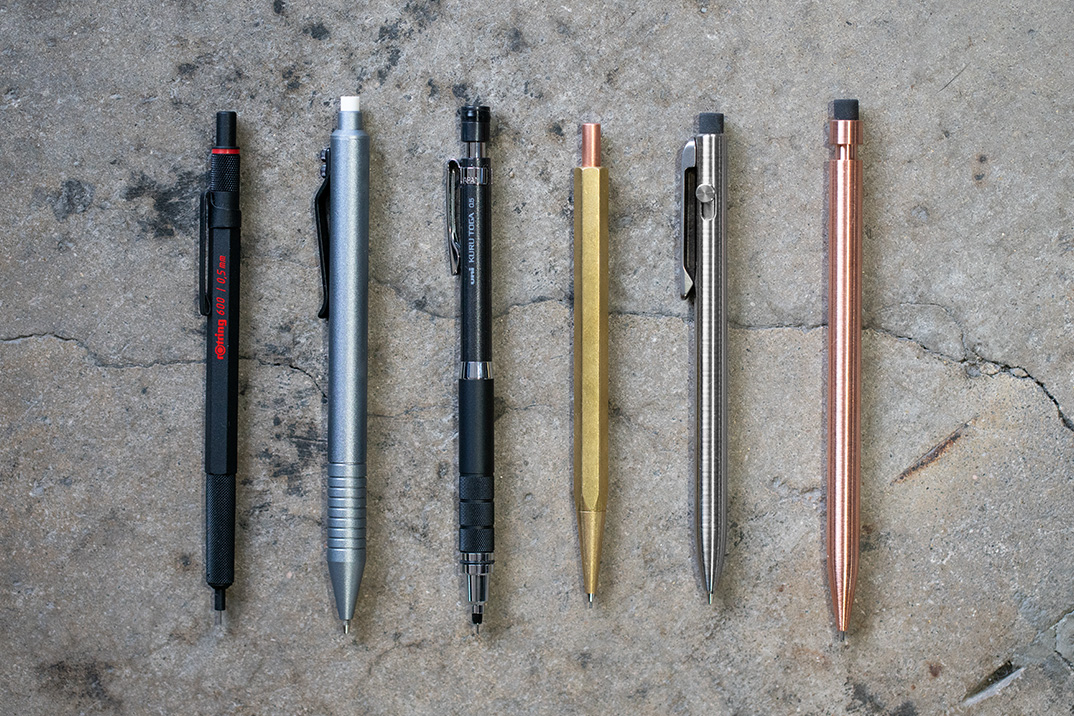
Mechanical pencils can be useful for older primary school children, but they are not the best choice for every child. The main advantage is consistency. A mechanical pencil keeps the same line width and does not need sharpening. This can help children who dislike stopping to sharpen a wooden pencil or who prefer a neat, steady line.
The drawback is lead breakage. Thin 0.5mm leads snap easily when a child presses hard. If your child still uses heavy pressure, a mechanical pencil may cause more frustration than a wooden pencil. For children who are ready to try one, 0.7mm lead is usually a better starting point because it is stronger.
A mechanical pencil is usually worth considering from around age 8 or 9, once a child writes fluently, controls pressure well, and understands how to replace or advance the lead. If the school does not allow mechanical pencils, keep them for homework or drawing at home.
You Might Like: Top Ergonomic Pencils For Writers And Artists That Guarantees Comfort
Pencil Labels Explained
Pencil packaging can be confusing, but a few labels are worth knowing before you buy.
- HB means the pencil is in the middle of the hardness scale. It is the standard choice for many older school children and everyday writing tasks.
- 2B means the pencil is softer and darker than HB. It can be helpful for younger children because it produces a clearer mark with less pressure.
- H and 2H mean the pencil is harder and lighter. These pencils are usually better for technical drawing than for everyday primary school handwriting.
- No. 2 is the common U.S. school-pencil grade and is broadly similar to HB, although exact grading can vary by manufacturer.
- Non-toxic means the product has been assessed for its intended use, but you should still check the age guidance and manufacturer information.
- ACMI AP is a useful U.S. safety certification for art materials.
- ASTM D-4236 means the art material follows U.S. hazard labelling requirements.
- FSC means the wood or paper material comes from a source certified by the Forest Stewardship Council. It is an environmental sourcing label, not a handwriting-quality label.
A Quick Age-Based Guide To Pencil Choice
Pencil needs shift as children grow, and a feature that genuinely helps a four-year-old may actually limit a ten-year-old. Here is a straightforward summary by age and school stage.
Preschool and Reception (ages 3 to 5):At this stage, the priority is making writing and drawing feel accessible, not precise. Look for a jumbo-sized triangular pencil with 2B soft lead. Non-toxic certification is essential. For coloured pencils, choose options with bright, saturated pigment to encourage a light touch.
Key Stage 1 and Early Primary (ages 5 to 7):Children at this stage are actively forming grip habits and beginning formal writing. A standard triangular or hexagonal pencil with 2B lead is appropriate. Barrel thickness can begin transitioning from jumbo toward standard as the child's confidence grows. Built-in erasers remain practical at this stage, and novelty pencils are best kept at home.
Key Stage 2 and Upper Primary (ages 7 to 11):Most children in this stage are writing for sustained periods and need a reliable, consistent tool. HB is the standard grade. Hexagonal pencils prevent desk-rolling and allow useful tip rotation. A separate quality eraser will give cleaner corrections than a built-in one. Mechanical pencils become a reasonable option from around age 8 or 9 for children who have already developed a light, controlled touch.
These are developmental guidelines, not rigid rules. If your child is 8 and still finds 2B more comfortable than HB, there is no reason to force the transition until they are genuinely ready.
A Simple Try-Before-You-Buy Test
If possible, let your child test two or three pencil types before buying a full pack. Ask them to write one short sentence and draw one small picture with each pencil.
Look for four things: a clear mark, relaxed fingers, steady control, and no repeated lead snapping. If your child has white knuckles, complains that the pencil feels slippery, presses hard to make the mark show, or keeps breaking the tip, try a different option.
For a young child, compare a jumbo triangular 2B pencil with a standard HB pencil. For an older child, compare a standard HB pencil with a hexagonal pencil and, if allowed, a 0.7mm mechanical pencil.
The best pencil is not always the most expensive one. It is the one your child can use comfortably and consistently.
What Not To Buy For Everyday School Writing
Some pencils look appealing in the shop but are less useful in the classroom.
- Avoid very hard H or 2H pencils for everyday primary school writing because they make faint marks and may encourage children to press harder.
- Avoid very short pencil stubs because they can force the fingers too close to the tip and make control harder.
- Avoid slippery round pencils for children who are still learning to grip, unless they already hold a pencil comfortably.
- Avoid novelty pencils with bulky toppers, raised decorations, or distracting designs for daily school use. They may be fine at home, but they can get in the way during lessons.
- Avoid unlabelled pencils for younger children if you cannot check the safety information, coating, or age guidance.
The 15-Tip Pencil Checklist Before You Buy
Use this as a quick reference before your next stationery shop visit.
- Choose a jumbo or wide barrel for many children under 6, especially if a standard pencil feels hard to control
- Pick a triangular pencil for kids who are still learning where to place their fingers
- Move to a hexagonal barrel once the pencil grip is stable and your child no longer needs as much guidance
- Try 2B for younger children who need a darker mark with less pressure
- Use HB for older children who write with better control and need a practical, everyday school pencil
- Avoid H and 2H pencils for everyday primary school writing unless a teacher specifically asks for them
- Replace very short pencils when your child can no longer hold them comfortably
- Check for non-toxic labelling and relevant safety information, especially for younger children
- Choose pencils that sharpen cleanly without splintering or breaking repeatedly
- Keep novelty pencils at home if they distract your child during lessons
- Use built-in erasers for convenience with younger children, but choose a separate quality eraser for neater older work
- Consider a weighted pencil only if your child struggles with pressure or control, and use it as one option rather than the only pencil
- Choose coloured pencils with bright, visible pigment so children do not need to press hard
- Consider FSC-certified or recycled-paper pencils if they also write smoothly, sharpen well, and have suitable safety labelling
- Try mechanical pencils from around age 8 or 9, only if your child writes with controlled pressure, and the school allows them
Frequently Asked Questions
Why Does My Child's Pencil Lead Keep Breaking?
The most common cause is excessive writing pressure. When a child presses too hard, the graphite core cracks internally even before the tip visibly breaks, so every small knock or drop causes it to snap.
What Pencil Is Best For A Child Learning To Write?
A wider triangular pencil with a soft, clear mark is often best for a child learning to write. Many younger children find a jumbo 2B pencil easier because it makes a darker mark with less pressure. The best choice is the pencil your child can hold comfortably and control without strain.
Is HB Or 2B Better For School Children?
2B is often better for younger children who need a darker mark with less effort. HB is usually better for older children who write for longer periods and need less smudging. For school tests or exams, always check the required pencil grade.
Are Mechanical Pencils Allowed At School?
Mechanical pencils are allowed in some schools but not in others. Check the school supply list before sending one in. If your child presses hard, a wooden HB pencil may be better because thin mechanical leads can snap easily.
Conclusion
Choosing the right pencil does not have to be complicated. Start with your child’s age, hand size, writing pressure, and school rules, then choose the pencil that makes writing feel easiest to control.
For younger children, a wider triangular pencil with a soft, visible mark can make early writing less frustrating. For older children, a standard HB pencil is usually a practical everyday choice. If your child presses hard, breaks leads often, or avoids writing, try a softer pencil, a different barrel shape, or a short test with a few options before buying a full pack.
Always check safety labelling, especially for younger children, and choose pencils from reputable brands where the materials and age guidance are clear. Eco-friendly pencils, coloured pencils, and mechanical pencils can all be useful, but only when they match your child’s stage and classroom needs.